
N A T U R EWe depend on her, she depends on us... |
Updates :
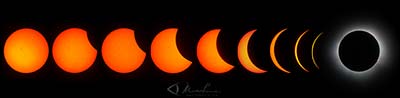
Year 2024 :
- Total solar eclipse - 2024-04-08, Astronomy page (2024-08-12)
Year 2022 :
- M31 - Andromeda Galaxy, Astronomy page (2022-07-13)
- IC1396 - Elephant's Trunk Nebula, Astronomy page (2022-06-01)
- Common Tern, Birds page (2022-06-01)
- NGC-7000 - North America Nebula, Astronomy page (2022-05-10)
- C34 - Veil Nebula, Astronomy page (2022-05-03)
- Crocus, Flora page (2022-04-26)
- Red Fox - Photos and video, Fauna page (2022-04-14)
- Orchid, Flora page (2022-03-19)
Year 2021 :
- Video 2021: A Space Odyssey, Astronomy page (2021-12-11)
- Leonard comet (photo and video), Astronomy page (2021-12-05)
- M42 - Orion Nebula, Astronomy page (2021-11-25)
- IC434 - Horsehead Nebula, Astronomy page (2021-11-18)
- NGC-1499 - California Nebula, Astronomy page (2021-11-16)
- Aurora borealis, Astronomy page (2021-11-12)
- NGC-2244 - Rosette Nebula, Astronomy page (2021-11-08)
- M45 - The Pleiades, Astronomy page (2021-10-15)
- Snow Leopard (photos and video), Fauna page (2021-10-10)
- M33 - Triangulum Galaxy, Astronomy page (2021-10-10)
- Tiger (photo and video), Fauna page (2021-10-02)
- IC1805 - Heart Nebula, Astronomy page (2021-09-06)
- C33 - Veil Nebula, Astronomy page (2021-08-21)
- IC1396 - Elephant's Trunk Nebula, Astronomy page (2021-06-24)
- Solar Eclipse, Astronomy page (2021-06-10)
- M81 - Bode's Galaxy, Astronomy page (2021-06-01)
- Mandarin Duck, Birds page (2021-04-29)
- M45 - The Pleiades, Astronomy page (2021-03-30)
- Neowise comet, Astronomy page (2021-03-19)
- Milky Way, Astronomy page (2021-03-02)
- Squirrel (photo and video), Fauna page (2021-03-02)
- Nature sauvage - Cover photo, Partners page (2021-02-22)
- Orion Nebula, Astronomy page (2021-02-22)
- Snow Bunting, Birds page (2021-02-14)
- Horned Lark, Birds page (2021-02-14)
- Rock Pigeon, Birds page (2021-02-12)
- Lapland Longspur, Birds page (2021-02-10)
- Boreal Owl, Birds page (2021-02-05)
- House Finch, Birds page (2021-01-29)
- Northern Saw-whet Owl, Birds page (2021-01-26)
- Barred Owl, Birds page (2021-01-22)
- Black-capped Chickadee, Birds page (2021-01-17)
- White-tailed Deer, Fauna page (2021-01-16)
- Common Redpoll, Birds page (2021-01-15)
- Short-eared Owl, Birds page (2021-01-13)
- Great Horned Owl, Birds page (2021-01-10)
- American Goldfinch, Birds page (2021-01-07)
- Northern Cardinal, Birds page (2021-01-04)
Year 2020 :
- Canadian moose (new video), Fauna page (2020-12-28)
- Long-eared Owl, Birds page (2020-12-25)
- Access to FindNature YouTube Channel (2020-12-24)
- Red-tailed Hawk, Birds page (2020-12-16)
- American Robin, Birds page (2020-12-12)
- European Starling, Birds page (2020-11-24)
- Snow Goose, Birds page (2020-11-12)
- Pileated Woodpecker, Birds page (2020-10-28)
- Chipmunk, Fauna page (2020-10-25)
- Biophare - 4 photos, Partners page (2020-10-25)
- Wood Duck, Birds page (2020-10-21)
- The Moon, Astronomy page (2020-10-11)
- Ruffed Grouse, Birds page (2020-10-05)
- Spruce Grouse, Birds page (2020-10-05)
- Black-backed Woodpecker, Birds page (2020-10-05)
- Sunflower, Flora page (2020-09-15)
- Cooper's Hawk, Birds page (2020-09-06)
- Green Heron, Birds page (2020-08-23)
- Québec Oiseaux - Cover photo, Partners page (2020-08-21)
- Lesser Yellowlegs, Birds page (2020-08-20)
- Least Bittern, Birds page (2020-08-08)
- Virginia Rail, Birds page (2019-07-07)
- Mute Swan, Birds page (2020-06-28)
- Red-necked Grebe, Birds page (2020-06-27)
- Gray Catbird, Birds page (2020-06-27)
- Common Yellowthroat, Birds page (2020-05-22)
- Nature Sauvage - 2 photos, Partners page (2020-05-20)
Year 2019 :
- Tufted Titmouse, Birds page (2019-12-27)
- Bald Eagle, Birds page (2019-12-09)
- Rock Pigeon, Birds page (2019-08-04)
- Black-crowned Night Heron, Birds page (2019-07-13)
- Spotted Sandpiper, Birds page (2019-07-09)
- Bobolink, Birds page (2019-07-05)
- Common Tern, Birds page (2018-07-02)
- Piping Plover, Birds page (2019-06-30)
- Northern Flicker, Birds page (2019-06-24)
- Eastern Screech-Owl, Birds page (2019-06-20)
- Marsh Wren, Birds page (2019-06-15)
- Bird Identification Guide (2019-06-09)
- Cedar Waxwing, Birds page (2019-06-05)
- Red-eyed Vireo, Birds page (2019-06-01)
- Blackpoll Warbler, Birds page (2019-05-31)
- Tennessee Warbler, Birds page (2019-05-30)
- Canada Warbler, Birds page (2019-05-30)
- Cerulean Warbler, Birds page (2019-05-28)
- Northern Parula, Birds page (2019-05-27)
- Black-throated Blue Warbler, Birds page (2019-05-27)
- Prothonotary Warbler, Birds page (2019-05-26)
- Yellow Warbler, Birds page (2019-05-26)
- Nashville Warbler, Birds page (2019-05-25)
- Blue-gray Gnatcatcher, Birds page (2019-05-25)
- American Redstart, Birds page (2019-05-24)
- Northern Waterthrush, Birds page (2019-05-24)
- Scarlet Tanager, Birds page (2019-05-23)
- Palm Warbler, Birds page (2019-05-23)
- Black-throated Green Warbler, Birds page (2019-05-22)
- Black-and-white Warbler, Birds page (2019-05-22)
- Yellow-rumbped Warbler, Birds page (2019-05-21)
- Philadelphia Vireo, Birds page (2019-05-20)
- Blue-winged Warbler, Birds page (2019-05-20)
- Kentucky Warbler, Birds page (2019-05-19)
- Magnolia Warbler, Birds page (2019-05-19)
- Tennessee Warbler, Birds page (2019-05-19)
- Yellow-throated Warbler, Birds page (2019-05-18)
- Blackburnian Warbler, Birds page (2019-05-18)
- Cape May Warbler, Birds page (2019-05-18)
- Wilson's Warbler, Birds page (2019-05-17)
- Chestnut-sided Warbler, Birds page (2019-05-17)
- Blackpoll Warbler, Birds page (2019-05-17)
- Prairie Warbler, Birds page (2019-05-16)
- Mourning Warbler, Birds page (2019-05-16)
- Bay-breasted Warbler, Birds page (2019-05-15)
- Whip-poor-will, Birds page (2019-05-14)
- Osprey, Birds page (2019-04-25)
- American Wigeon, Birds page (2019-04-24)
- Red breasted Merganser, Birds page (2019-04-15)
- Long-tailed Duck, Birds page (2019-04-13)
- American Kestrel, Birds page (2019-04-06)
- Merlin, Birds page (2019-04-03)
- Lesser Scaup, Birds page (2019-04-03)
- Great Gray Owl, Birds page (2019-03-30)
- Common Goldeneye, Birds page (2019-03-29)
- Evening Grosbeak, Birds page (2019-03-21)
- American Marten, Fauna page (2019-03-11)
- Canada Goose, Birds page (2019-03-06)
- Gyrfalcon, Birds page (2019-03-05)
- Green-winged Teal, Birds page (2019-03-02)
- Snowy Owl, Birds page (2019-01-23)
- Bohemian Waxwing, Birds page (2019-01-09)
Year 2018 :
- Sharp-shinned Hawk, Birds page (2018-12-28)
- Northern Hawk Owl, Birds page (2018-12-14)
- Red-breasted Nuthatch, Birds page (2018-12-11)
- Pine Grosbeak, Birds page (2018-12-09)
- Boreal Chickadee, Birds page (2018-12-06)
- Nature Sauvage - 1st Prize - Birds, Partners page (2018-11-23)
- Common Redpoll, Birds page (2018-11-21)
- Quebec birds atlas, Partners page (2018-11-17)
- Double-crested Cormorant, Birds page (2018-11-06)
- New print service, Print page (2018-10-29)
- Hooded Merganser, Birds page (2018-10-17)
- White-crowned Sparrow, Birds page (2018-10-12)
- Tennessee Warbler, Birds page (2018-10-06)
- Eastern Screech-Owl, Birds page (2018-10-04)
- QO cover, Partners page (2018-10-02)
- Nashville Warbler, Birds page (2018-09-30)
- FindNature.com now mobile friendly (2018-09-27)
- New home page & logo (2018-09-16)
- FindNature.com is now officialy secured
- Red-throated Loon, Birds page (2018-08-13)
- Atlantic Puffin Birds page (2018-08-11)
- Razorbill Birds page (2018-08-09)
- Peregrine Falcon, Birds page (2018-07-17)
- Common Loon, Birds page (2018-07-04)
- American Oystercatcher, Birds page (2018-06-18)
- Bullfrog, Fauna page (2018-06-18)
- Northern Shoveler, Birds page (2018-06-01)
- Black Tern, Birds page (2018-06-01)
- Gadwall, Birds page (2018-06-01)
- Redhead, Birds page (2018-05-31)
- Red-necked Phalarope, Birds page (2018-05-31)
- Marsh Wren, Birds page (2018-05-26)
- Northern Parula, Birds page (2018-05-25)
- Yellow Warbler, Birds page (2018-05-25)
- Great Blue Heron, Birds page (2018-05-16)
- Great Egret, Birds page (2018-05-14)
- Horned Grebe, Birds page (2018-05-09)
- Brown Pelican, Birds page (2018-05-09)
- Magnificent Frigatebird, Birds page (2018-05-09)
FindNature.com - Statistics :
2018-08-17: More than 6,3 millions pages accessed by close to 2 millions internet users from more than 80 countries.
HD video dedicated to Humanité et Biodiversité
Hymn to Nature in action...
Photos: Michel Lamarche, Music: Robert Len, Postface: Hubert Reeves
An environment to enjoy, respect and protect
Through our eyes, windows to our conscience, the beauty and value of nature is revealed !
Of all the living creatures on Earth, the human is the only one to have a highly evolved brain. This defining feature allows us to become aware of the Universe and appreciate it. However, on the scale of the Universe, the presence of man is rather insignificant. To give an idea of that, just imaging if we scaled down the age of the Universe to one day. The Homo Sapiens would have only appeared around midnight minus one second.
The comparison becomes even starker if we examine the Universe's size. It provides the perfect lesson in modesty for us. Nevertheless, for all we know, man is at the peak of evolution in terms of intelligence, complexity and awareness. These are the extremes that allow us to reflect on our role Universe and especially towards nature.
Hubert Reeves has raised the point, through his books, courses and conferences, that man would not have appeared without certain astronomical occurrences. For example, the atoms which make up each person are created in stars. When a star dies, after a lifetime of several billion years, atoms are released into space. In effect, we are created from star dust. The phrase, "children of the cosmos", is actually a very appropriate name for man.
The intelligence that we have inherited from the Universe (or God) gives us the ability to generate the most beautiful, and horrible, behavior. On one hand, we have the capacity, to appreciate and protect nature's beauty; preserving nature's heritage as well as our own. For this reason, Hindu culture beautifully describes that, "the rocks and the stars are our sisters.".
On the other hand, our "intelligence" (in a twisted way) also allows us to endanger, next few decades, that which took millions of years to create.
Some examples include, the greenhouse effect, accelerated by carbon gas, over-fishing of the oceans, the melting of the polar ice caps, destruction of the ozone layer, the threat to many species, etc.
If this unique intelligence of ours is not guided by planetary awareness and a sense of individual responsibility, we run the risk of catastrophe.
There is enough proof in recent climate changes to see how these phenomena are accelerating. However, there are many powers at work, specifically governments and monopolies that are not concerned (or not doing enough) about it. Their focus remains on short term profit. For example, the Kyoto Accord has not been ratified by leading nations such as the United States, Australia and China. We have to ask ourselves what kind of planet will our children inherit if we standby.
As excuses to this problem, it is often noted that there are serious economic consequences in applying the Kyoto Accord. However, for every year that passes without an agreement, the costs of intervention will continue to increase. In terms of financial costs and detriment to people caused by tornadoes, hurricanes, droughts, floods and fires the numbers are rising each year. Additionally, the threat also covers other natural phenomena such as arable land (and its diminishment),
the Amazon (the lungs of our planet), sources of fresh water, etc. All of these changes are occurring much faster than many would like to have us to believe.
"Stop concealing the state of danger
in which we find the Earth,
or pretending that it costs too much
to protect the environment,
when we know very well that doing
nothing will cost us even more!"
Kofi Annan
Ex secretary-General of the UN
Holding the title of most intelligent being on the Planet, it is our responsibility to protect our planet for all those living and those who will live. Based on the principle that the more we care for something, the more we want to protect it, FindNature.com has been created to increase awareness and appreciation of Mother Earth, her importance and fragility. Additionally, this web site is intended to inform others of the dire importance of taking responsibility and making their own contribution to the Earth.
Even if it seems like a drop bucket, we should realize that the Oceans were filled, little by little, with these drops of water. As Dostoyevsky wrote, "Living without hope is not living at all!".
Eyes are the window of our conscience. I wish you pleasant observations and discoveries in FindNature.com.
Michel Lamarche
Bulletins :
- Bulletin #12 - Why economy is in bad shape? (2012-05-28)
- Bulletin #11 - Cooperation a must for Humanity & Biodiv. (2012-04-05)
- Bulletin #10 - Fabulous birds (HD video) (2012-04-05)
- Bulletin #9 - Stop time... (HD video) (2012-04-03)
- Bulletin #8 - Research & Ethic (2012-03-31)
- Bulletin #7 - Story: the chipmunk and the Cooper's Hawk (2012-03-23)
- Bulletin #6 - Earth solutions... (2012-02-17)
- Bulletin #5 - L'Univers expliqué à mes petits-enfants (2012-02-11)
- Bulletin #4 - Indignation in our society (2012-02-10)
- Bulletin #3 - The egg or the enveloppe? (2012-02-08)
- Bulletin #2 - Listening to our planet (2012-02-02)
- Bulletin #1 - Education, a priority(2012-03-13)


